Eating Better Without Overthinking
September 17, 2026
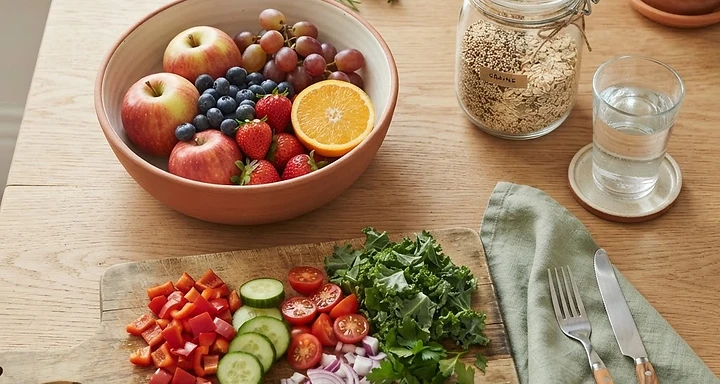
Nutrition advice usually arrives as a list of things to stop doing. Stop the sugar, stop the snacks, stop the takeaway. Lists of prohibitions are exhausting to hold in your head at seven in the evening, which is exactly when dinner decisions get made.
A better approach is to change what is easiest rather than what is forbidden. Three principles, then some practical defaults.
Think in a plate, not a spreadsheet
Forget counting for a moment. Picture a plate. Half of it vegetables or fruit. A quarter of it protein: eggs, fish, chicken, beans, lentils, paneer, yoghurt. A quarter of it something starchy and whole where you can manage it: rice, roti, potatoes, bread, pasta.
That is the whole model. It works with almost any cuisine, which matters more than it sounds. Most people abandon a way of eating not because it was wrong but because it did not fit the food their family actually cooks.
Getting roughly right most of the time is the goal. Not perfectly right, not every meal.
Make the good choice the visible choice
People eat what they can see. This is the single most reliable lever available to a household and it costs nothing.
- Fruit in a bowl on the counter, not in a drawer at the back of the fridge.
- Chopped vegetables on the middle shelf at eye level, where they get seen first.
- The biscuit tin stays somewhere that requires a decision to reach.
- A jug of water on the table, because nobody gets up to fetch it.
None of this requires willpower. It changes the default without a conversation.
Three default meals solve most weeks
You do not need seven new recipes. You need three meals you can cook without thinking, that everyone will eat, from ingredients you usually have. Ours looks like this:
- One pot of lentils or beans with rice or bread, plus whatever vegetable is in the fridge.
- Eggs on toast with tomatoes or spinach. Ten minutes, no planning.
- A tray of roasted vegetables with chickpeas or chicken, cooked once and eaten twice.
Default meals remove the daily decision, and the daily decision is what usually becomes takeaway.
Snacks without negotiation
Children negotiate most over the food that sits between meals. Set the boundary once instead of daily: a snack is fruit, or something with protein in it, and then the kitchen closes until the next meal. Boring rules that hold consistently beat clever rules that are argued each time.
If your child is picky
Repeated exposure beats pressure. A new food may need to appear on the plate eight or ten times before it is eaten, and a child who is forced to eat it usually needs longer, not shorter.
- Keep one safe food on the plate at every meal, so nobody leaves hungry.
- Serve the new thing in a small portion, next to the familiar thing, without commentary.
- Let them help prepare it. Children eat more of what they cooked.
- Never make dessert the reward for finishing vegetables, it teaches that vegetables are the punishment.
Shop without a spreadsheet
A rough plan for tomorrow, made while today is still calm, removes most of the stress. You do not need a meal plan for the month. You need to know what is in the fridge before it stops being usable.
The simple version: before shopping, check the vegetable drawer, then buy only what fits the three default meals plus one new thing you actually want to cook.
What to ignore
Anything that promises a reset, a cleanse, or a fix in days. Bodies do not work that way, and the time spent on a two week experiment is better spent on one default meal you will still be cooking next year.
Free tools
Our weekly meal planner, nutrition card set and family safety checklist are free to print and need no account. The meal planner is deliberately simple: seven days, four meals, and a shopping column, because a planner you fill in is worth more than one you admire.