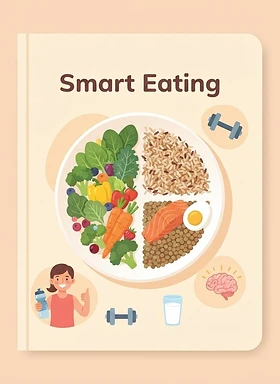
The Smart Eater's Plate — Dietitian Guide for Ages 9–12
A pre-teen nutrition guide for the growth spurt years: extra protein, iron, and calcium, with hydration habits that carry into the teens.
The Smart Eater's Plate
Dietitian advice
What diet is recommended
For ages 9 to 12, the growth spurt means hunger and nutrient needs both rise. Keep the balanced plate, but pay extra attention to protein, iron, and calcium:
- Half the plate — vegetables and fruit, with extra leafy greens for iron and folate.
- A quarter of the plate — whole grains for steady energy.
- A quarter of the plate — lean protein, with fish, beans, lentils, eggs, chicken, or tofu appearing often.
- Two to three servings of dairy (or fortified alternatives) each day for calcium.
Serve three meals and one to two snacks. Keep water as the main drink — about 6 to 8 glasses a day. Limit sugary drinks and eating while using screens, which makes it easy to overeat without noticing. Girls in particular need more iron from around age 10 as menstruation begins.
Nutritional values
A typical day for a 9 to 12 year old provides roughly:
- Energy: 1,800–2,200 calories (needs rise with the growth spurt)
- Protein: 34–52 g
- Iron: 8–11 mg (girls need the higher end from about age 10)
- Calcium: 1,300 mg
- Fiber: 25–31 g
- Vitamin D: 600 IU (15 mcg)
Calcium needs jump to 1,300 mg at this age — more than at any other time of life — because this is when bone density is built fastest.
Why these nutrients matter
What is best about the Smart Eater's Plate at this age:
- Calcium at 1,300 mg maximizes peak bone mass, which is mostly set before age 18 and protects against breaks now and osteoporosis decades later.
- Iron supports the rapid growth of muscle and blood volume, and for girls replaces the iron lost each month after menstruation begins.
- Protein fuels the growth spurt in height and muscle that defines these years.
- Fiber keeps energy steady, supports a healthy gut, and helps children feel full on the right foods.
- Healthy fats (nuts, seeds, avocado, fish) support the hormone changes and brain development of early puberty.
Building these habits before the teenage years makes them far easier to keep when independence and fast food start to compete for attention.
Reviews
Write a review
Reviews come from families with an account. Sign in to share what your child thought.